
2018 / PHD DISSERTATION
RESEARCH / DISCOVERY IN MOTION
Look closer.
Change the question.
Two chapters of cancer research. Explore the discoveries through real microscopy, animation, and the questions behind the work.
NC STATE / DOCTORAL RESEARCH
A new way out.
What if a blood vessel helps cells cross its wall?
I led studies that identified angiopellosis: a previously undescribed way cells leave the bloodstream. Following that discovery into cancer revealed that tumor cells could make the journey together.
THE LIVING MODEL · ZEBRAFISH
A living window into circulation.
Transparent zebrafish embryos let us observe blood vessels and cells inside a living organism. Seeing the movement unfold makes it possible to investigate events that a still image alone cannot explain.
Zebrafish circulation from my research archive. This footage introduces the living model used to study cell movement.
Explore the imaging researchTHE CANCER EXODUS HYPOTHESIS
The power of staying together.
In our experimental models, connected tumor-cell clusters could exit circulation together and had greater potential to form secondary tumors than individual cells.
The Cancer Exodus Hypothesis connects those observations. Understanding that collective journey gives researchers another part of cancer spread to investigate.
Read the cancer-cluster studyThe discovery, up close
The vessel wall was part of the story.
We first asked how therapeutic stem cells reach tissue after entering the bloodstream. Time-lapse imaging showed blood-vessel cells reshaping around them, allowing them to move outside the vessel. We named the process angiopellosis.
That finding opened a new question: could cancer cells use this route, too? Studying their exit as connected groups became the foundation of my dissertation. These studies identify mechanisms in experimental models and questions for future research.
The first-author discovery paper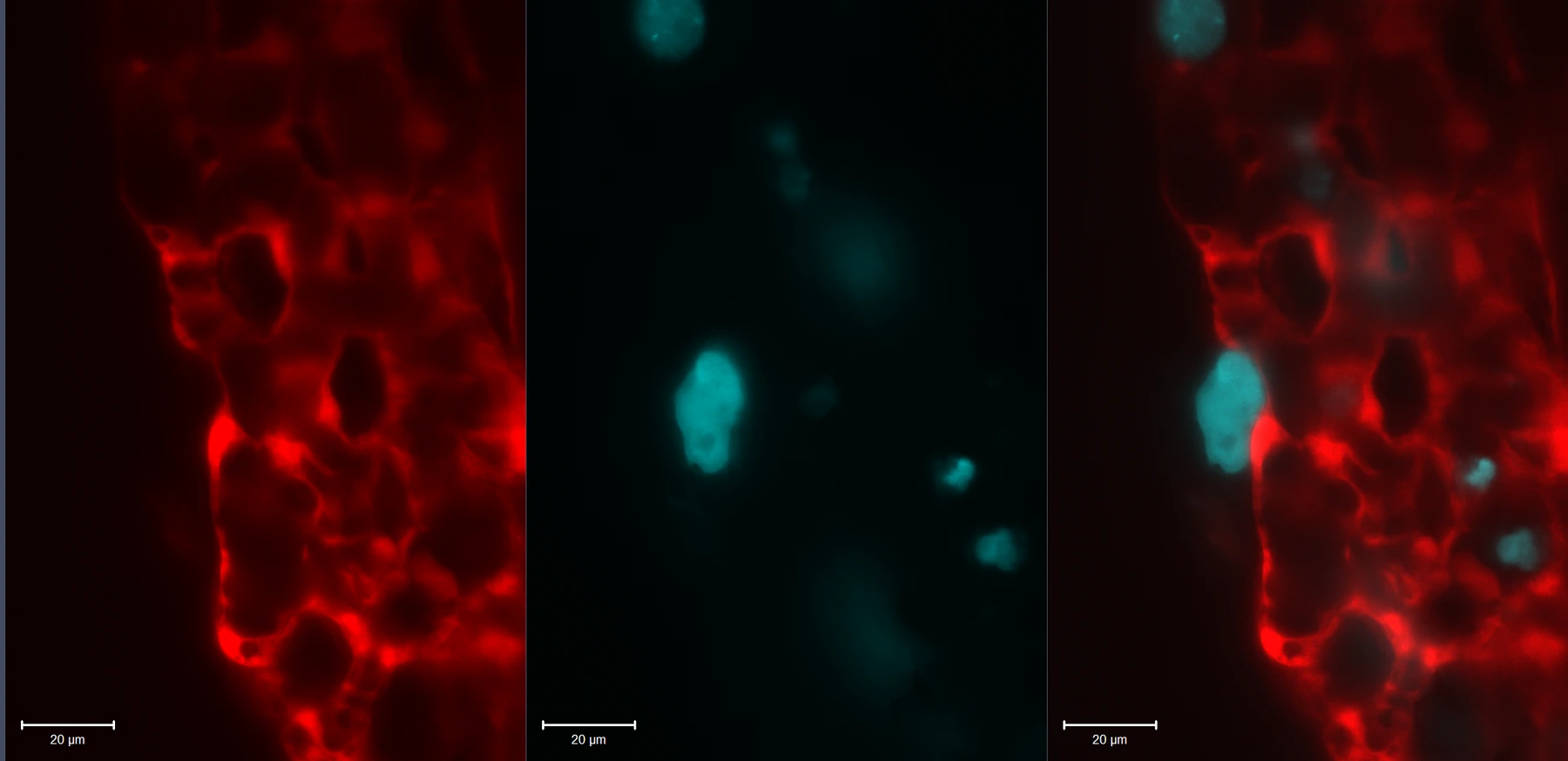
Dissertation & selected publications
2024 / CANCERS
Reading cancer through the bloodstream
My review of circulating tumor cells as a liquid biopsy: the biology, technical challenges, and clinical relevance.
Read the review2021 / FRONTIERS IN ONCOLOGY
Watching metastasis in motion
We isolated tumor-cell clusters after they left circulation and identified molecular changes associated with that process.
Read the imaging study2019 / JOURNAL OF CELL SCIENCE
Cancer cells can travel together
Our study of connected cell clusters, their exit from blood vessels, and metastatic potential.
Read the cancer-cluster study2016 ONLINE · 2017 ISSUE / STEM CELLS
Discovering angiopellosis
Our first report of an alternative mechanism of cell extravasation.
Read the discovery paperExplore the concepts
Angiopellosis on WikipediaCancer Exodus Hypothesis on WikipediaThe original studies above provide the research behind these concepts.
DUKE CANCER INSTITUTE / 2018–2023
The same gene.
A different message.
After studying how cancer cells move, I turned to the instructions inside them.
At Duke, my postdoctoral research and later work as a senior research associate explored RNA splicing, cancer progression, and the biological questions behind unequal cancer outcomes.
RNA SPLICING, SIMPLY
Cells edit their messages.
One gene can produce different RNA versions, called isoforms. Some make different protein forms; others change how a message is regulated or whether a protein is made.
In cancer, changes to splicing can affect growth, survival, movement, and treatment response. How much a gene is expressed is only part of the story. The version matters, too.
Explore the science of RNAStart with a gene.
The cell makes an initial RNA copy of a DNA sequence.
Select and join.
Sections called introns are removed; retained sections called exons are joined.
Make different versions.
Alternative choices change the RNA message—and sometimes the protein it produces.
Prostate cancer: testing a change in the message
SEMA3C / FIRST-AUTHOR AACR ABSTRACT, 2020
What does a splice change actually do?
I investigated SEMA3C, a gene involved in cell signaling. Our team used CRISPR to remove a selected exon and model a splice variant in prostate-cancer cells.
Early results presented at AACR showed reduced growth in a laboratory model. The finding gave us a starting point for investigating how a small change in a message can alter cell behavior.
Read the conference abstract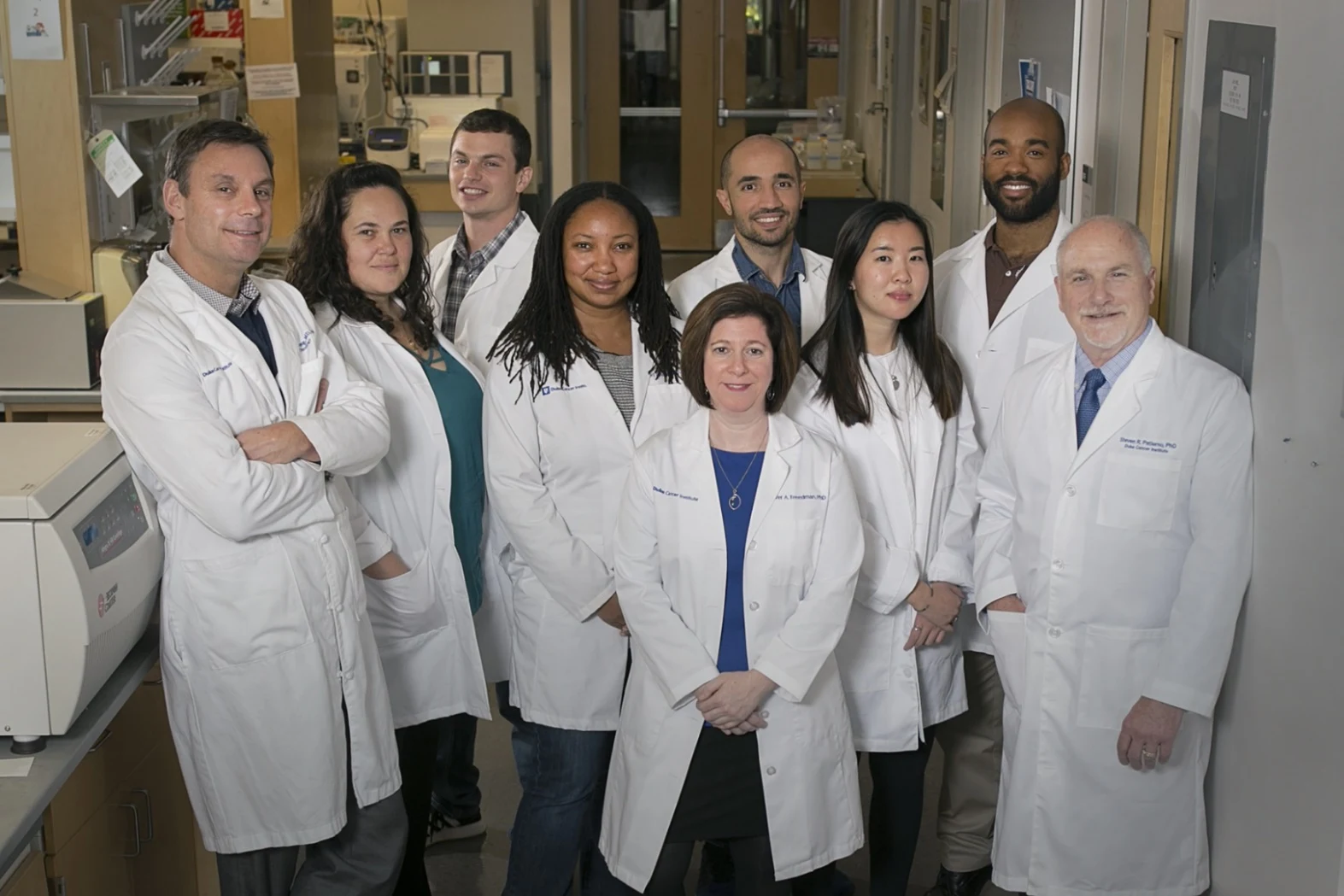
THE THREAD INTO TODAY
Discovery, with people in view.
These projects shaped how I ask questions and evaluate evidence. Today, I bring that perspective to clinical research at Duke—how studies are designed, who can participate, and how well the findings serve people living with cancer.
Explore my current work View all publications